Loading...
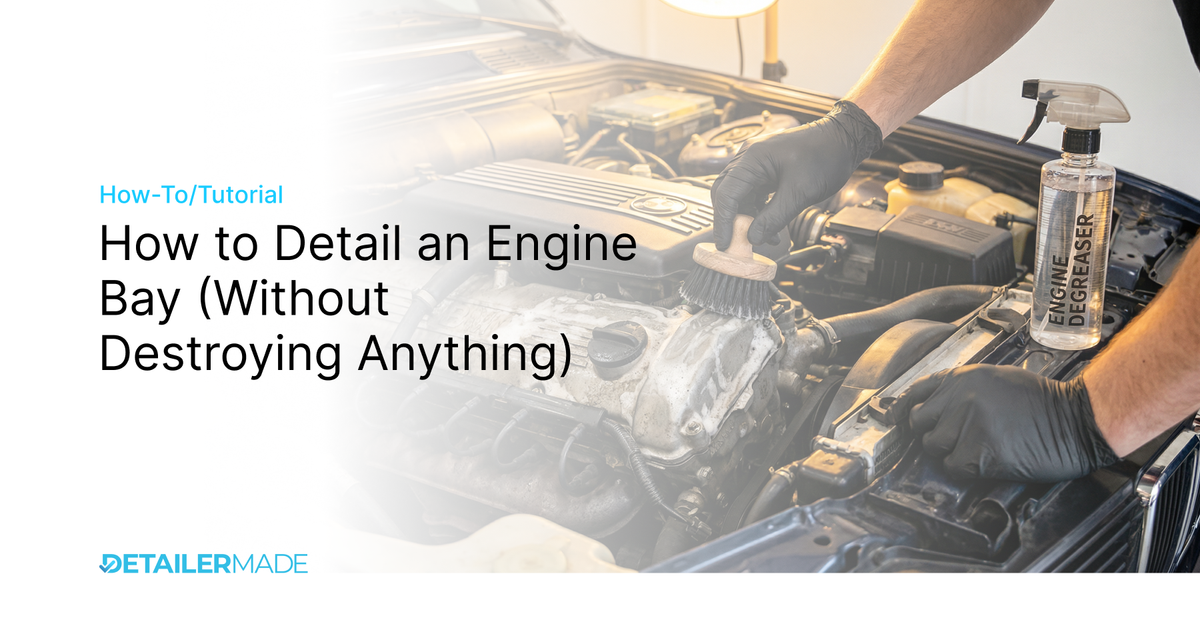
How to Detail an Engine Bay (Without Destroying Anything)
JD
Detailermade Team
Engine bay detailing is one of the services detailers are most cautious about offering — for good reason. Done wrong, it damages electrical components, causes intermittent faults, and creates problems the client discovers two miles down the road. Done right, it's a high-impact, high-value service that dramatically changes the presentation of a vehicle. This guide covers what to protect, what to use, and what to avoid.
Before You Start: Assess First
Not every engine bay is a good candidate for pressure washing. Before you touch anything, check for: • Active oil leaks: excess oil means a source that'll re-soil immediately. Point it out before starting. • Exposed electrical connectors without proper housings: uncommon but worth checking on older vehicles or those that have had engine work done • Aftermarket intake systems with exposed air filters that aren't waterproof • Cracked hoses, compromised vacuum lines, or obvious mechanical issues
Document what you see before touching anything. A pre-existing electrical fault that surfaces after you clean the bay will be blamed on you unless it's documented.
Protecting Sensitive Components
Before any water or product is applied: • Air intake / filter: cover with a plastic bag and tape securely. A wet intake on a running engine is a hydrolock risk. Non-negotiable. • Alternator: cover with a bag. Water in the alternator causes charging system failures. • Fuse box: cover with a bag. Water in the fuse box causes cascading electrical problems. • Exposed wiring connectors: focus on areas where connectors aren't fully seated in sealed housings • Dipstick tubes: cover or tape • Open breather lines and vents
The goal isn't to make the engine waterproof — engines operate in rain. The goal is to prevent directed high-pressure water from being forced into systems that aren't designed to handle it.
Hot Engine or Cold?
Warm, not hot. If the vehicle was driven to you, let it cool 20–30 minutes. Slightly warm metal responds better to degreaser than fully cold without the thermal shock risk of a fully hot engine encountering cold rinse water. Hot metal plus cold water creates stress on sensors, plastic housings, and can crack older rubber components. Don't detail a hot engine.
Degreaser Selection
A diluted all-purpose cleaner is the right starting point for most engine bays: Simple Green Automotive at 3:1–5:1, Meguiar's Super Degreaser at 10:1–20:1, or Chemical Guys Degreaser at labeled dilution. Apply panel by panel, let dwell 2–3 minutes. Don't let it dry — on a warm engine this happens faster than expected.
For heavy grease buildup on commercial vehicles or high-mileage engines that haven't been cleaned in years: ZEP Purple, Purple Power, or a citrus-based degreaser at appropriate concentration. Apply, dwell, agitate, rinse thoroughly.
Avoid: highly concentrated alkaline degreasers on aluminum at full strength — they etch aluminum. Avoid silicone-based engine dressings — they attract dust and create sticky residue over time.
Brushes and Tools
A set of detailing brushes handles most mechanical agitation: • Large soft brush for engine cover surfaces, valve covers, large flat areas • Medium brush for intakes, hose routing, and sensor housings • Small detail brush for tight areas around bolts, connectors, and brackets • Stiff bristle brush for heavy grease on metal surfaces only (not painted or plastic)
Compressed air before rinsing loosens dry debris and dust from crevices. Compressed air after rinsing blows water out of connector housings and wiring areas before dressing is applied.
Rinsing
Use a garden hose or low-pressure fan tip setting on a pressure washer held at distance. High-pressure direct water at close range into connectors and sensor housings is exactly how electrical problems happen. Rinse with the engine off and keys out of the ignition. Rinse thoroughly — APC residue left on rubber and plastic causes premature degradation over time.
Drying and Dressing
Compressed air or a portable blower first — blow water out of crevices, connectors, and pooled areas. Then start the engine and let it run 3–5 minutes to help evaporate residual moisture from heat. Monitor for any warning lights. If something doesn't look right, diagnose before returning the vehicle.
Dressing: apply to a microfiber or foam applicator and wipe onto rubber hoses, plastic covers, and silicone components. Not spray-and-walk-away — that puts dressing on your concrete. Good options: 303 Aerospace applied sparingly on rubber hoses, Gtechniq C6 Matte Dash & Trim on plastic covers, Optimum Opti-Clean diluted as an anti-static treatment for plastics.
Pricing and Liability
Engine bay cleaning is an add-on quoted separately: • Light wipe-down (no water or degreaser): $50–$75 • Full degreaser + rinse + dress: $100–$175 • Heavy commercial engine bay: $200+
Get a client signature acknowledging that engine work carries inherent risk and that pre-existing electrical or mechanical issues are not covered by the service. Keep it to one paragraph. This isn't about avoiding accountability for legitimate damage — it's about documentation when a pre-existing fault surfaces after a clean engine bay makes it easier to notice.