Loading...
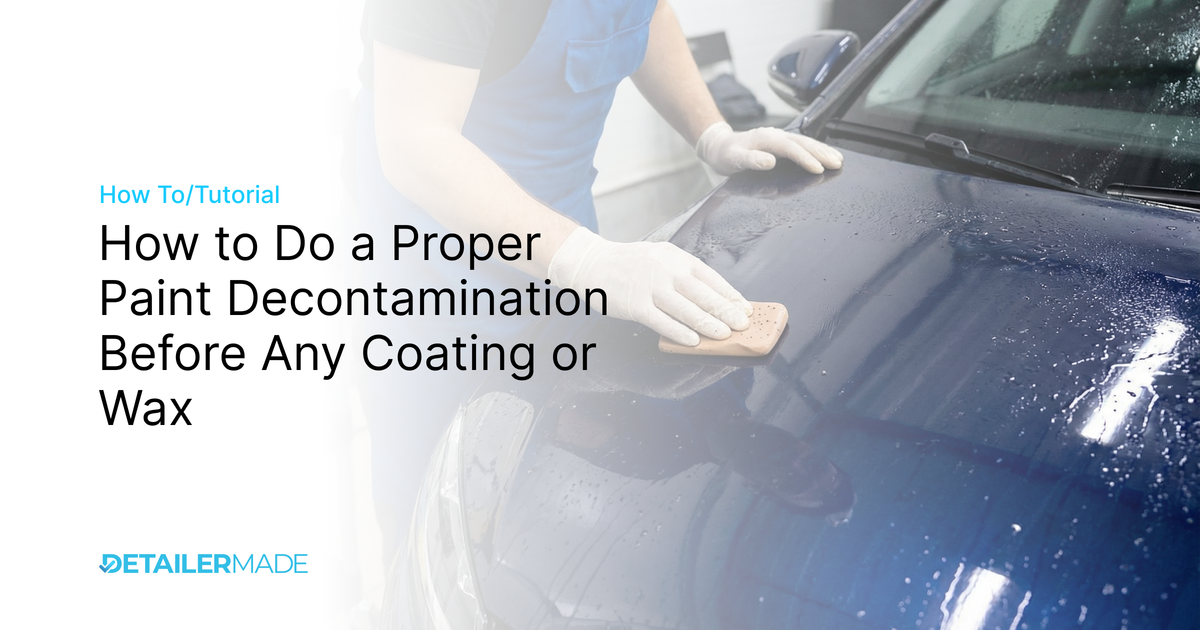
How to Do a Proper Paint Decontamination Before Any Coating or Wax
JD
Detailermade Team
Most details start with a wash. That's fine — but if you're about to apply a coating, a sealant, or even a quality wax, washing the car is only the first step. What's sitting underneath the surface of that paint — embedded iron particles, tar spots, industrial fallout — won't come off with soap and water. And if you skip decontamination and go straight to applying protection, you're sealing all of that contamination in.
This is one of the most commonly skipped steps in detailing, and it's also one of the most consequential. This guide covers the full chemical decontamination process: why each step exists, what order to do it in, and the products worth using.
Why Paint Contamination Happens
Every car on the road accumulates contamination that a pressure washer can't touch. Iron particles shed from brake rotors become airborne and embed themselves into paint as microscopic metal shards. Industrial fallout rains down in areas near railways, airports, and manufacturing zones. Tar and road bitumen bonds to lower panels and rocker areas. Tree sap and bug splatter etch into the clear coat if left too long.
Over time, embedded iron particles oxidize and expand inside the clear coat, causing micro-damage from the inside out. The telltale sign is the purple or rust-colored reaction you see when applying a good iron remover — that color change is the product reacting with iron contamination. On a car that looks clean to the naked eye, the results can be genuinely surprising.
Beyond the damage angle, contamination is also a coating adhesion killer. Ceramic coatings, sealants, and waxes bond to the clear coat surface — not to a layer of embedded iron and grime sitting on top of it. Proper decontamination is non-negotiable before any protection application.
The Plastic Bag Test
Before you start decontamination, run a quick check to assess how bad the situation is. After washing and drying the car, put a thin plastic bag over your hand and drag it lightly across the paint surface. On clean, properly decontaminated paint you'll feel almost nothing — smooth, frictionless glass. On contaminated paint, you'll feel a rough, gritty texture. Like rubbing over fine sandpaper.
That roughness is everything embedded in and bonded to the clear coat. The plastic bag amplifies what your bare fingertips would miss. Pay special attention to horizontal surfaces (hood, roof, trunk) and areas near wheels — those accumulate the most fallout. If the paint feels rough, decontamination isn't optional. Run this test again after the full decon process to confirm you got it all.
Step 1: Iron and Fallout Remover
Start with a chemical iron remover. This is always first because it works below the surface — dissolving and loosening embedded iron particles chemically before any physical contact with the paint. Spray it panel by panel and let it dwell for 3–5 minutes. You'll see the product turn purple or dark red as it reacts with iron particles. This is the ferrous reaction working — it's a good sign.
Don't let it dry on the paint. In hot weather or direct sun, work smaller sections and rinse before it flashes. On heavily contaminated paint (cars near train tracks, daily highway drivers, neglected vehicles), a second application can make sense after rinsing the first.
Products worth using: • CarPro IronX — strong iron reaction, one of the more tolerable scents in this category • Gyeon Q2M Iron — excellent dwell time, works well on heavily contaminated paint • Koch Chemie Reactive Rust Remover — popular in production shops for its cut on serious fallout • Carpro Iron X Snow Soap — useful as a pre-soak on vehicles that haven't been decontaminated in a while
Rinse thoroughly after each panel. The iron remover has done its job chemically — now get it off the surface.
Step 2: Tar and Adhesive Remover
Iron removers don't touch tar. Road tar, bitumen from fresh asphalt, tree sap, and adhesive residue from stickers or dealer badging require a dedicated solvent-based remover. These contaminations are typically found on rocker panels, lower door edges, the front bumper and splitter, and anywhere near the rear of the vehicle.
Apply the product to a microfiber towel and work spot by spot — you're not wiping the whole panel, you're targeting the contamination directly. Let the solvent dissolve it before wiping. You don't need to scrub. Pressure makes it worse; dwell time does the work. For heavy tar deposits, folding the microfiber and pressing the solvent into the spot for 20–30 seconds before wiping usually breaks it free cleanly.
Products worth using: • Koch Chemie Tar Remover (Teerferniger) — very effective, lower odor than most, safe on painted surfaces • CarPro Tar X — citrus-based formula, gentler than petroleum solvent-based options • 3M General Purpose Adhesive Remover — solid choice for sticker residue, dealer badges, and stubborn adhesive
Wipe with a clean microfiber after. If you're heading straight to clay, the solvent residue isn't an issue — it'll be removed in the next step.
Step 3: Clay Bar or Clay Mitt
After chemical decontamination, the surface needs physical decontamination. Clay removes bonded surface contamination that chemicals can't fully address — anything above the paint surface that's bonded to it rather than embedded in it. Overspray, fine industrial fallout that didn't dissolve fully, remaining surface texture.
Clay bar vs. clay mitt: This comes down to preference and efficiency. A traditional clay bar gives you direct tactile feedback and works well on smaller sections. The downside is that dropping it means throwing it away — it picks up debris from the ground instantly. Clay mitts (like the Nanoskin Autoscrub or Chemical Guys Clay Mitt) are more durable, faster across a full car, and can be rinsed clean. For a production environment, the mitt wins on efficiency. For fine, detailed work or light paint, many detailers still prefer a soft clay bar for the control.
Lubrication is critical. Use a spray detailer, a diluted rinseless wash solution, or a dedicated clay lubricant — whatever you use, it needs to be generous. Clay on dry or barely-lubricated paint will induce scratches. Work in straight, overlapping passes. You'll feel the surface resistance decrease as contamination is lifted. Check the clay or mitt regularly — if you see heavy contamination loading up, fold to a clean surface or rinse the mitt.
Work panel by panel. After claying the full car, run the plastic bag test again. If you did this right, the difference is immediate and obvious — the surface should feel like clean glass. Any remaining roughness means a second pass is needed on that area.
Order Matters — Don't Skip Ahead
Always go: iron remover → tar remover → clay. In that order, every time. If you clay before using iron remover, you're dragging embedded metal particles across the paint surface during claying, potentially inducing fine scratches. Let the chemistry dissolve what it can before you introduce any mechanical action.
It's also worth noting: decontamination happens after washing, not before. Washing removes loose dirt and debris first so the decontamination products are working on bonded contamination — not fighting through a layer of surface grime.
What Comes After Decontamination
At this point the paint is chemically clean and physically smooth. If paint correction is in the plan, this is where you pick up a DA or rotary and get to work. Correction results are significantly better on decontaminated paint — compounds cut more evenly, pads don't load up with contamination, and the defect assessment under a light is accurate rather than masked by surface texture.
If you're applying a coating, follow paint correction with an IPA (isopropyl alcohol) panel wipe — typically a 70/30 or 50/50 IPA/distilled water mix depending on the coating requirements. This removes polishing oils and any remaining residue from the correction process. Coatings bond directly to the clear coat surface. Even trace polish oils will interfere with the curing bond. Don't skip the panel wipe.
If you're skipping correction and going straight to protection with a sealant or wax, a final IPA wipe is still good practice. It ensures you're bonding to the paint, not to whatever was left behind from the decontamination process.
Decontamination as a Regular Service
Decontamination isn't just a pre-coating prep step. For vehicles on a maintenance plan, a full iron decon at least twice a year — typically spring and fall — keeps iron fallout from accumulating and damaging the clear coat long-term. Spring decon removes the winter road debris, salt residue, and brake dust buildup. Fall decon clears summer industrial fallout before the car gets buttoned up for cold weather.
It's also one of the easiest upsells in a maintenance detail package. Once you show a client the purple iron reaction turning their car's paint panels, the $40–$75 add-on sells itself. Most clients have no idea what's embedded in their paint until they see the reaction — and once they see it, they want it done every time.