Loading...
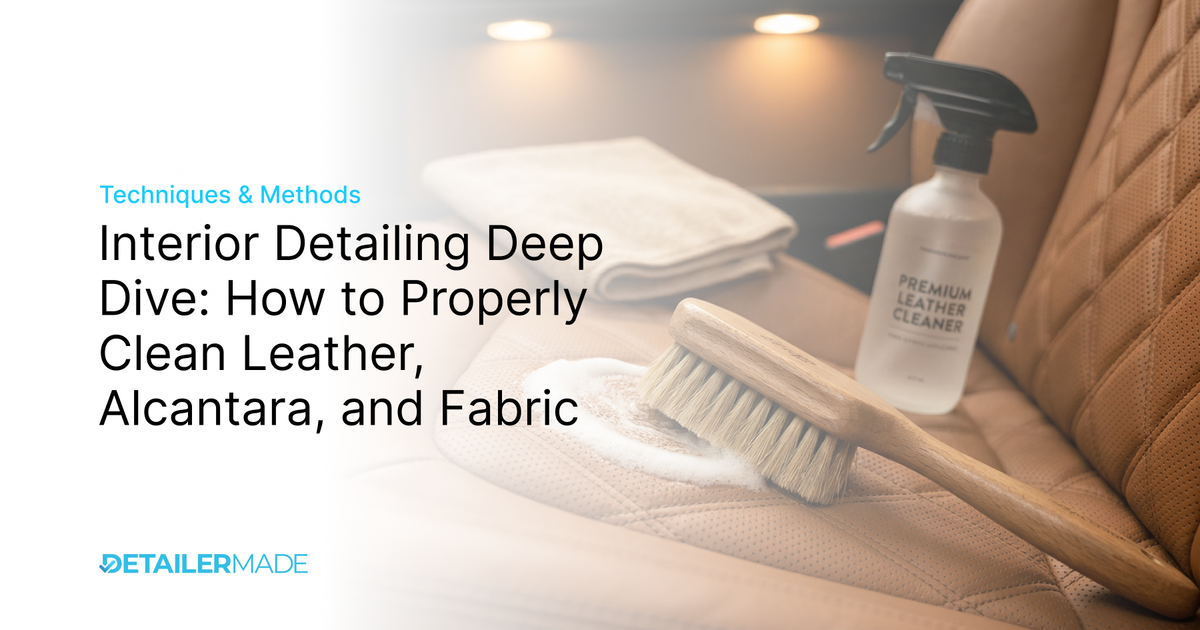
Interior Detailing Deep Dive: How to Properly Clean Leather, Alcantara, and Fabric
JD
Detailermade Team
Interior detailing is where a lot of shops lose margin and occasionally damage expensive materials. Leather, Alcantara, and fabric might all be "upholstery," but they require different products, different tools, and different levels of care. Using the wrong product on Alcantara can ruin a $15,000 interior. Using the wrong cleaner on leather repeatedly will cause it to dry and crack prematurely. This guide covers each material: how to identify it, clean it safely, protect it, and the mistakes that cause real damage.
Leather
Most clients call anything that isn't cloth "leather." In practice, modern automotive interiors contain several types: • Full-grain or top-grain genuine leather: porous, develops patina, responds to conditioning. Found in higher-end vehicles. • Corrected-grain leather: surface buffed and coated with a pigment layer. Very uniform appearance, less porous. Common in premium vehicles. • Perforated leather: any of the above with perforations for ventilation. Requires extra care to avoid driving product into the holes. • Leatherette/PU leather: synthetic material. Increasingly common in EVs and affordable vehicles. Requires different treatment than genuine leather.
Cleaning: use a pH-neutral leather-specific cleaner (Lexol Cleaner, Chemical Guys Leather Cleaner, Meguiar's Gold Class Leather). Apply to a soft microfiber or soft-bristle brush. Work in sections with light circular motions on textured areas. Don't oversaturate — leather absorbs moisture and excess water causes edge darkening and staining. Wipe clean with a fresh microfiber.
For heavier soiling, a soft detailing brush with slightly more product works better than pressing harder with a cloth. You're agitating product into the pores, not scrubbing the surface.
Conditioning: after cleaning, apply a quality leather conditioner (Leatherique, Leather Honey, Chemical Guys Leather Conditioner). This is not optional. The cleaning process removes oils from the leather. The conditioner replaces them. Skip conditioning long enough and the leather dries, stiffens, and eventually cracks. This is a warranty conversation waiting to happen.
Protection: a leather sealant or protectant (Leather Master Protection Cream, 303 Aerospace on leatherette) creates a barrier against UV, body oils, and grime. Apply after conditioning.
Perforated leather: avoid foam-based or wet products that penetrate perforations and saturate the cushioning material underneath. Use a drier product applied to a cloth, not directly to the surface.
Leatherette/PU: a diluted APC (5:1–10:1) cleans well. Don't use traditional leather conditioners — they don't absorb and leave residue. Use a vinyl/leatherette protectant (303 Aerospace, Gtechniq L1 Leather Guard).
Alcantara
Alcantara is the most unforgiving material in automotive interiors and the one most commonly damaged by detailers who don't understand it. It's a microsuede synthetic used by Ferrari, Porsche, Lamborghini, McLaren, and increasingly in production vehicles (Subaru BRZ/GR86, Volkswagen GTI Performance Pack, various sporty trim levels). The surface nap gives it its look and feel. Damage the nap and you've damaged the material.
What to avoid on Alcantara: • Any product containing silicone, wax, or polymer coating agents — these mat down the nap permanently • Stiff brushes that abrade the fibers • Excess moisture that saturates the material and promotes mildew in the backing • Circular wiping motions that flatten and tangle the nap • Heat from steam too close or too hot
How to clean: use a dedicated Alcantara cleaner (Colourlock Alcantara Cleaner is well-regarded) or a very diluted gentle upholstery cleaner — avoid anything with surfactants that leave residue. Apply to a soft microfiber, not directly to the surface. Work in straight, linear motions following the direction of the nap. Blot, don't scrub.
For stubborn soiling: a very soft-bristle brush (detailing brush or soft makeup-quality brush) with minimal product, used in straight light strokes. The goal is to lift the soil without disturbing the fiber structure.
After cleaning: brush the nap back into uniform position with a soft boar's bristle or dedicated suede brush while still slightly damp. This is what restores the consistent appearance after cleaning. Skip this step and sections look flat, matted, or directionally inconsistent. Dry at room temperature — not with heat guns or in direct sun.
Fabric and Cloth Upholstery
Fabric is the most forgiving to clean but the easiest to over-wet and the hardest to dry fully. Over-wet fabric that isn't extracted and dried properly is the interior job that comes back two weeks later with a mildew complaint.
Vacuum first, always. A thorough vacuum with upholstery attachments removes the majority of dry debris before any liquid is applied. Cleaning wet dirt into fabric is far more difficult than cleaning fabric that's been properly vacuumed. This step is non-negotiable.
With a hot water extractor (Mytee, Oreck Commercial, Bissell BigGreen): apply diluted APC (5:1–10:1) with a medium-bristle upholstery brush, agitate, and extract immediately. The extractor injects solution and pulls moisture and soil simultaneously, leaving fabric clean and relatively dry. This is the professional method.
Without an extractor: apply diluted APC to a microfiber, work sections with a medium brush, extract excess moisture with a clean dry microfiber and firm pressure. Works well but takes longer to dry. Pay close attention to not oversaturating — especially in seat base seams and cushion edges where moisture pools.
Stain treatment: address stains before full cleaning. Enzyme-based cleaners (Bissell Professional Spot & Stain, CarPro Inside) work on food, urine, and organic stains by breaking down the organic compounds. Apply, let dwell per instructions, extract. Don't rub a stain — blot and extract.
Drying: use forced air (portable fan or the car's own climate system running with windows cracked) to accelerate drying. A car returned with damp upholstery that develops a musty smell is a client complaint problem. Ensure the interior is fully dry before returning the vehicle — on humid days this can take several hours.
Pricing Interior Work Correctly
Interior detailing pricing should reflect material complexity and condition: • Basic vacuum and wipe: $75–$100 • Full fabric deep clean with extraction: $150–$250 • Leather clean + condition: $150–$200 • Alcantara cleaning: premium pricing, $200+ depending on coverage • Full interior mixed materials in poor condition: $300–$500
Document material condition on intake with photos. Cracked leather, Alcantara that's been cleaned with the wrong products, and heavily stained fabric all have realistic outcome limits. Set those expectations before the job, not after.