Loading...
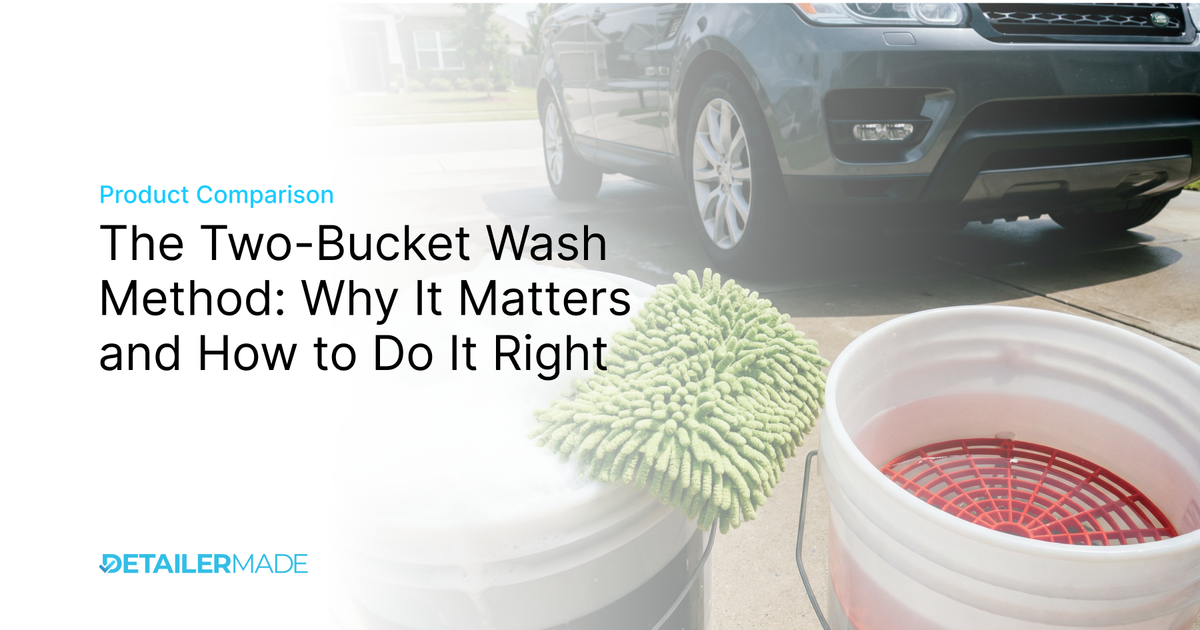
The Two-Bucket Wash Method: Why It Matters and How to Do It Right
JD
Detailermade Team
Every detailer learns about the two-bucket method early. Most use it. But not everyone understands why it works — and understanding the mechanism makes you better at executing it and better at explaining it to clients who ask why you're using two buckets.
Why Washing Causes Swirl Marks
Every wash that puts a mitt or cloth in contact with painted surfaces creates the potential for swirl marks. Swirl marks aren't inflicted by some external force — they're inflicted by your own wash process. The mechanism is simple: dirty wash water loaded with the grit, brake dust, and road contamination you just removed from the car gets reintroduced to the paint when you reload your mitt from a single contaminated bucket.
Grit particles trapped in mitt fibers, dragged across paint under hand pressure, create the fine circular scratches that make paint look dull and hazy under direct light. Microfiber is better than sponges because it encapsulates contaminants in fiber structure rather than dragging them across the surface — but if you reintroduce contaminated water, even the best mitt becomes a problem.
How the Two-Bucket Method Works
One bucket holds clean, fresh wash solution. The other holds clean rinse water with a grit guard at the bottom. The sequence:
- Load your wash mitt from the soap bucket
- Wash a section of the vehicle
- Rinse the mitt in the rinse bucket — agitate against the grit guard to release contamination
- Reload from the soap bucket
- Repeat
The dirty water stays in the rinse bucket. The soap bucket stays clean. Your mitt is rinsed before it goes back into fresh solution. Contamination goes to the bottom of the rinse bucket instead of back onto the paint.
Grit Guards: What They Do and Why They Matter
A grit guard is a raised plastic screen that sits at the bottom of the wash bucket. It serves two purposes: it creates a physical shelf that keeps contamination settled at the bottom separated from the water above, and the screen traps grit as you agitate your mitt against it during rinsing.
Without a grit guard in the rinse bucket, rinsing your mitt stirs up contamination sitting at the bottom and reintroduces it to the mitt fibers. With a grit guard, contaminants settle through the screen and stay below it. Use grit guards in both buckets. The rinse bucket guard is the critical one, but having one in the soap bucket too adds a second layer of protection that costs almost nothing.
Correct Technique
Work top-down. Roof first, then upper panels and windows, then door panels, then rockers and bumpers last. Lower panels carry the most contamination — road grime, tar, brake dust. Washing them first and moving up risks carrying that heavy load up the car.
Straight-line passes, not circles. Circular motions create circular defect patterns. Straight back-and-forth passes create linear marks that are significantly less visible under light and easier to machine polish out if they do occur.
Load the mitt generously. A good microfiber mitt works by floating above the surface on a cushion of soapy water, encapsulating particles rather than dragging them. A well-loaded, sudsy mitt maintains that cushion. A dry or under-loaded mitt drags and scratches. Keep it wet, keep it lubricated.
Rinse frequently — after every one or two panels, and more often on the lower, dirtier sections of the vehicle. Don't wash the whole car before rinsing the mitt.
Pre-soak before contact. A foam cannon pass or a thorough rinse loosens surface contamination before your mitt ever touches the paint, reducing the load your mitt and buckets need to handle. Less contamination on the paint means less contamination in the process.
Mitt and Soap Selection
Mitt: A quality microfiber chenille wash mitt — The Rag Company Cyclone, Chemical Guys Chenille, or Adam's Microfiber Wash Mitt — is the right tool. Avoid foam sponges entirely. Sponges have no fiber structure to trap contaminants and drag debris across paint instead of lifting it away.
Soap: Dedicated automotive wash shampoo, not dish soap. Dish soap strips wax, sealants, and coating protection — it's formulated to cut through grease and oils, and it does the same thing to your paint protection. A quality automotive soap (Meguiar's Gold Class, Gyeon Q2M Bathe+, Adam's Car Wash Shampoo) cleans effectively without stripping protection. For coated vehicles, a coating-safe soap like Gyeon Bathe+ or Chemical Guys HydroSuds is worth using — these are pH-neutral and formulated to not degrade SiO2 protection over time.
Rinseless and Waterless Alternatives
For mobile detailers working without water hookup or in water-restricted environments, rinseless wash is the practical alternative. Products like Optimum No Rinse (ONR), Gyeon Q2M Rinse Free, and Adam's Waterless Wash encapsulate contamination in a lubricating solution that allows safe wiping without a rinse.
The ONR two-bucket rinseless method is widely used: 1–2 oz of ONR per 2 gallons of water, pre-soaked microfiber towels or a wash mitt, one panel at a time, folding to a clean towel side after each pass. On lightly to moderately dirty vehicles it's a genuine substitute for a full wet wash. On heavily contaminated vehicles — mud, heavy road grime, caked brake dust — a pre-rinse is worth finding before going rinseless.
Waterless wash products (applied directly to a dry panel and wiped off) are appropriate only for light surface dust on an otherwise clean car. Not for a genuinely dirty vehicle. Dragging road grime across dry paint with a microfiber and a spray detailer is a reliable way to swirl paint. Know when each method is appropriate.